Storage & Backup Security in the Age of AI Attacks
About Core6™
StorageGuard - by Core6 - is the ONLY Security Posture Management solution for Storage & Backup systems, helping to ensure these systems are secure and compliant.
At a Glance
- AI is accelerating vulnerability discovery and exploitation
- Storage & backup systems are prime targets
- Patching can’t keep up, especially in storage and backup environments
- The exposure window is growing
- Continuous hardening and configuration drift management reduce exploitability before patches are applied
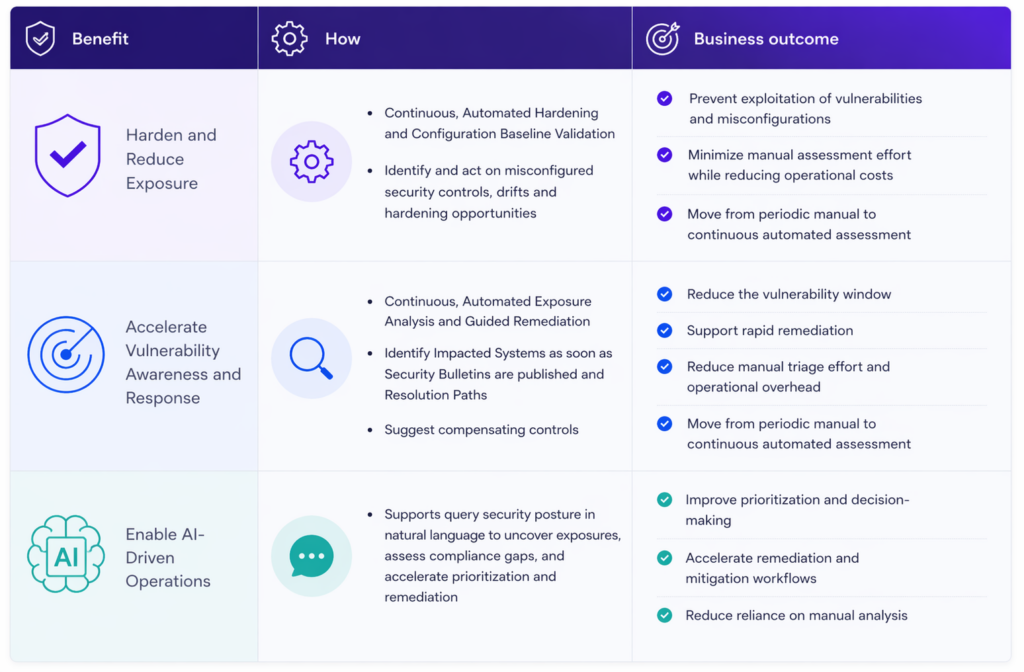
- StorageGuard shrinks the exposure window through continuous hardening, instant vendor advisory impact analysis, and guided remediation
AI is reshaping cybersecurity – but not in a balanced way. While defenders are still figuring out how to operationalize it, attackers are already using AI to move faster, scale wider, and target more precisely.
What used to require time, skill, and coordination can now be automated and accelerated. The result is simple: the time between initial access and real impact is shrinking. And increasingly, that impact lands on storage and backup systems.
From infrastructure to target
It used to be that attackers focused primarily on the network edge or user endpoints. That’s no longer the case.
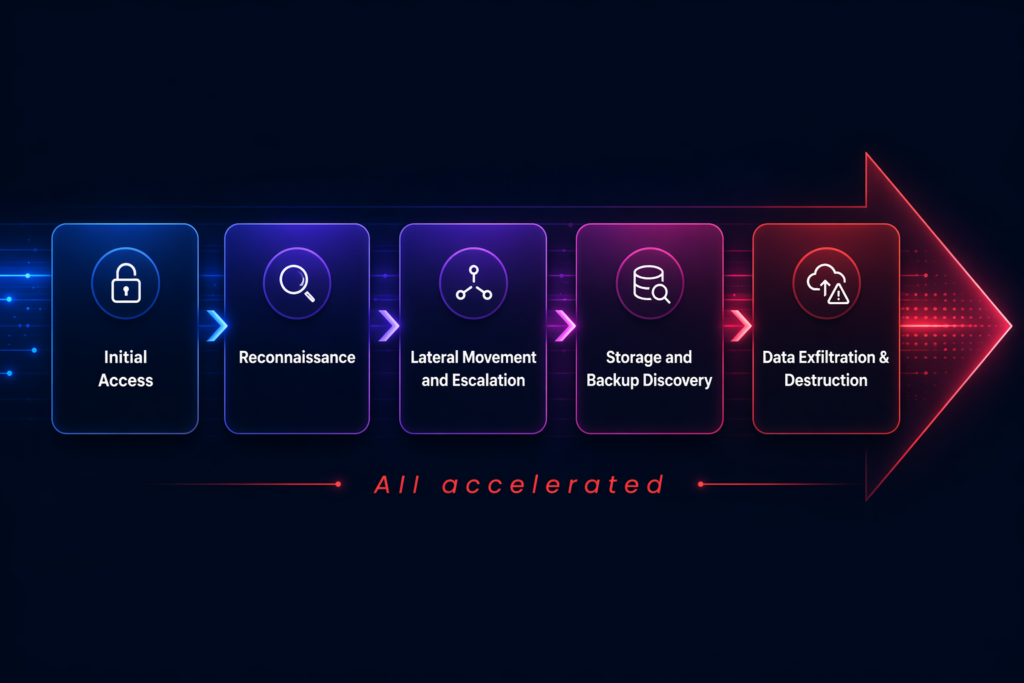
AI-assisted attacks make initial compromise easier than ever – whether through advanced phishing, deepfake-based social engineering, or automated reconnaissance. But the more interesting shift happens after that first foothold. Once inside, attackers aren’t exploring blindly. They’re moving directly toward the systems that matter most – including storage and backup infrastructure as outlined in the latest CheckPoint Security report.
AI is compressing the attack timeline
One of the more profound changes is not just what attackers target, but how quickly they get there. AI enables faster vulnerability discovery, more effective lateral movement, and a more systematic way to identify weak points across infrastructure. It also reduces noise-making detection harder while improving attacker precision.
Zero Day Clock shows the median time-to-exploit crossing into hours in 2026, with many CVEs exploited on or before disclosure.
More vulnerabilities and faster exploitation
At the same time, new AI-driven tools are dramatically increasing the volume of discovered vulnerabilities. Projects like Mythos are reportedly uncovering large numbers of previously unknown issues, including critical flaws in foundational components. Security advisories are expanding accordingly, sometimes listing hundreds of CVEs in a single release.
The net effect is pressure on defenders from both sides: more vulnerabilities appear, and they are exploitable faster.
The growing gap between discovery and remediation
This creates a familiar – but now more acute – problem: the gap between when a vulnerability surfaces and when it is actually remediated. In theory, patching should close that gap. In practice, it’s not that simple in storage and backup environments.
These systems are not as flexible as typical compute platforms. Advisories are not published immediately, patching can be disruptive, requires careful testing and coordination, and is often delayed due to operational realities.
So there is always a window of exposure. In the past, that window was manageable. In the AI era, it is increasingly not. Attackers are simply moving faster than patch cycles.
Why hardening becomes decisive
If patching cannot reliably close the exposure window, something else has to.
That “something” is configuration posture.
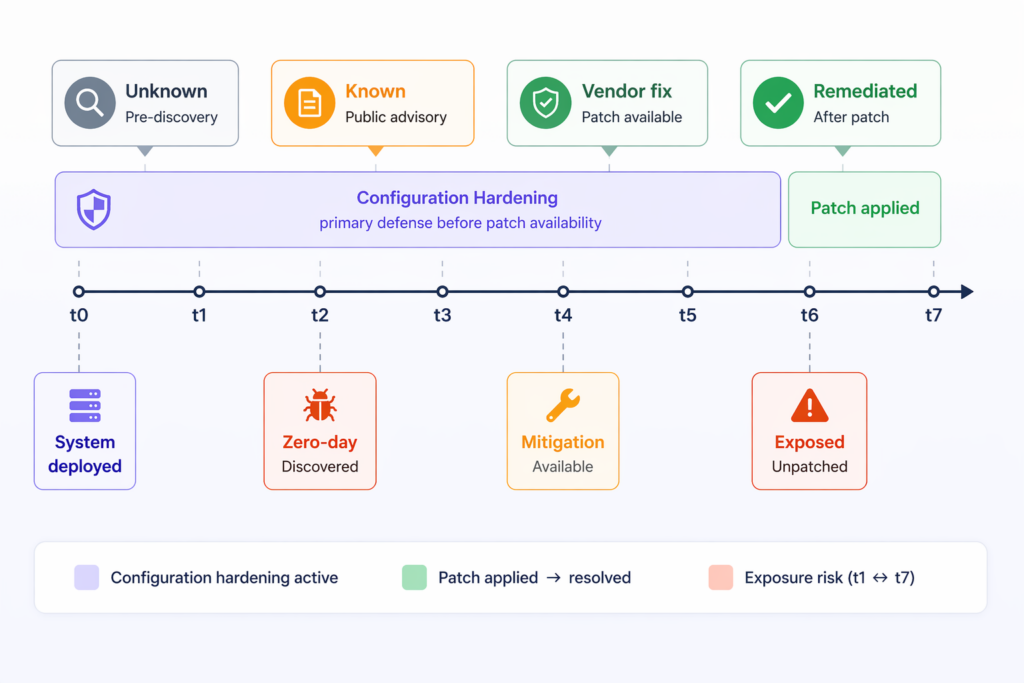
Whether a vulnerability is actually exploitable often depends less on its existence and more on the surrounding conditions: access controls, enabled services, network exposure, authentication settings, and so on. In other words, the system’s hardening level.
Seen this way, the timeline splits into two distinct phases. Before a patch is available, or before it’s applied, hardening is the primary line of defense. Afterward, patching and remediation reduce the remaining risk. But that first phase is where exposure is highest, and where traditional approaches are weakest.
This leads to a shift in mindset. Vulnerabilities are unavoidable; they will continue to grow in number, especially with AI accelerating discovery. Exploitation, however, is still conditional. It depends on whether the environment allows it.
Hardening is what changes that condition.
Rethinking how storage and backup systems are secured
Adapting to this reality requires rethinking how these systems are managed. It’s no longer enough to rely on periodic reviews or manual assessments. By the time those happen, the state of the environment has already changed.
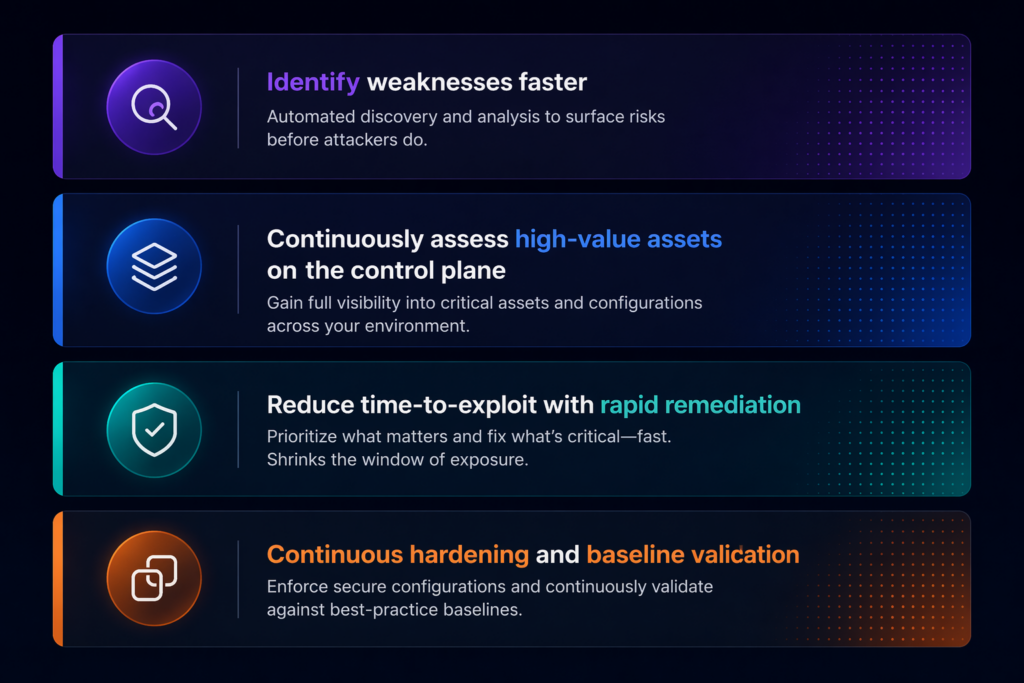
What’s needed instead is continuous visibility into configuration, continuous validation of security baselines, and the ability to quickly understand exposure as new advisories appear.
Equally important is the shift in perspective. Storage and backup platforms can’t be treated as backend infrastructure that gets occasional attention. They need to be treated as perimeter systems: high-value, high-risk, and continuously assessed.
That also changes the way remediation is approached. It’s not just about applying patches, but about prioritizing what matters, understanding impact quickly, and reducing the time it takes to act.
Closing the exposure window
All of this ultimately comes down to one objective: shrinking the exposure window. AI is expanding it from one direction, by increasing the volume and speed of vulnerabilities. Operational constraints are expanding it from the other, by slowing down remediation. The only way to compensate is to reduce exploitability within that window.
That’s where continuous hardening and exposure visibility come in. They don’t eliminate vulnerabilities, but they make them far less exploitable.

How StorageGuard helps
- Continuously hardens posture
Detects misconfigurations, drift, and hardening gaps across storage and backup systems. - Reduces exposure before patching
Focuses on the conditions that make vulnerabilities exploitable—not just the vulnerabilities themselves. - Instant impact analysis
Maps new security advisories to your environment to quickly identify affected systems. - Guided, prioritized remediation
Helps teams focus on what matters and act faster (patches, config fixes, compensating controls). - Cuts manual effort
Automates what is typically slow, manual triage and periodic assessment. - Enables faster decisions
Support for natural language queries make it easy to understand exposure and prioritize actions.
Summary
Frequently Asked Questions (FAQs)
How is AI changing the speed of cyberattacks?
AI is significantly accelerating vulnerability discovery and exploitation, reducing the time from discovery to attack from days to hours.
Why can’t patching keep up with modern threats?
Patching is often delayed due to testing requirements, operational risk, and system constraints—especially in storage and backup environments
Why is security harder for storage and backup environments?
Storage and backup systems are harder to secure because patching is slower, changes are riskier, and configurations require careful coordination
Why is hardening critical before a patch is available?
Before patches are released or applied, hardening is the primary defense because it reduces the conditions that allow vulnerabilities to be exploited.
Talk To An Expert
Ensure your storage & backup systems are hardened and compliant.